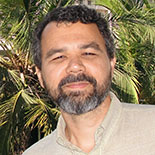
Permanent Professor of PPGI
Research Line: Applied Intelligent Systems and Optimization
Started at PPGI: 01/2007
Work regime: 40h Full Time
Academic Trajectory: Professor Lucena began his professional journey early, at age 14, in technical education in Electronics at CEFET, where he acquired a solid foundation to pursue his career in Engineering. After this experience, he entered UFRJ, where he studied Electronic Engineering, with a brief period at UERJ. His academic training advanced with the completion of a Master’s and Doctorate in Systems and Computer Engineering at COPPE/UFRJ, under the guidance of professors Edmundo de Souza e Silva and Rosa Leão.
During his doctoral studies, he began working at the National Research Network (RNP), where he remained for 7-8 years. In this environment, he had direct contact with the management of large-scale networks and with the academic backbone infrastructure, developing both theoretical and practical skills. This experience strongly influenced his future research and his interdisciplinary approach in academia.
In 2006, he joined UNIRIO as a professor, initially serving as a substitute professor before being permanently hired that same year. At PPGI-UNIRIO, since its creation in 2007, he has consolidated his research in network management, security, and artificial intelligence for networks.
Scientific Contributions: Professor Lucena has distinguished himself through his diverse academic output, contributing significantly to the advancement of research in networks and information systems. His work involves frequent publications in high-impact events such as SBRC, ITSC, SBPO, and ICUMT, consolidating his presence in the scientific community and expanding the reach of his investigations.
Among his main research focuses, the study of quality of service inference in networks stands out, using advanced machine learning and federated learning approaches. This line of research seeks to optimize the performance and reliability of networks, thereby improving technological infrastructure across various contexts.
Another central aspect of his work is the integration of computer networks and information systems, promoting an interdisciplinary approach that connects the two areas and explores new possibilities for innovation. However, the professor criticizes the Information Systems community’s lack of receptiveness to network research, pointing to the need for greater dialogue and collaboration between these areas to strengthen research and generate more effective solutions.
Furthermore, he has invested in fostering inter-institutional collaborations, seeking to broaden the impact of his research both in Brazil and abroad. His work reflects a continuous effort to establish strategic partnerships and promote a more integrated and innovative academic environment.
Contributions to the PPGI: Professor Lucena has a strategic vision for the future of the PPGI-UNIRIO, promoting reflections on the program’s role in society and on ways to make it more attractive to new students. His vision seeks to balance academic excellence with practical relevance, ensuring that the training offered prepares students for real challenges in the technology sector.
One of his main criticisms concerns the excessive dependence on CAPES evaluation, arguing that the program should broaden its focus to students’ social and professional impact, rather than merely meeting institutional metrics. To this end, he encourages more applied research, bringing scientific output closer to market demands and making academic results more accessible and useful to industry.
Furthermore, he is committed to developing strategies to increase undergraduate student retention and spark interest in postgraduate studies, creating a more stimulating environment for students to pursue their education at PPGI-UNIRIO. He also advocates a more integrated teaching model, proposing ways to strengthen the connections among teaching, research, and the market, ensuring that students leave the program better prepared for the real challenges of the IT sector.
Researcher Training: Throughout his career at PPGI-UNIRIO, Professor Lucena has dedicated himself to training researchers aligned with both market needs and academic demands, promoting an approach that balances applied research and scientific rigor. His work supervising master’s and doctoral students has been marked by a focus on applied research, ensuring that the work produced has practical relevance and impact in the technology sector.
Furthermore, it encourages interdisciplinarity, promoting research that combines networks, security, and optimization, exploring new approaches and methodologies to solve complex problems in these areas. This diversity of topics allows students to develop a broader and more integrated view of Computing, preparing them to work across different areas of industry and academia.
Another central aspect of his work is preparing students for the job market, helping them face complex professional challenges and apply their knowledge strategically. To this end, he encourages impactful scientific production, motivating his advisees to publish in prestigious conferences and journals, strengthening their academic training and increasing their visibility in the scientific community.
Visibility and Impact in the Scientific Community: Professor Lucena has been actively working to strengthen the PPGI-UNIRIO program’s presence in both academia and the professional sector, consolidating its efforts across multiple fronts. His continuous scientific production in renowned conferences and journals ensures the visibility of the research developed in the program, expanding its impact and recognition in the scientific community.
Furthermore, his participation in scientific committees and international events reinforces PPGI-UNIRIO’s connections with global research networks, facilitating knowledge exchange and the establishment of new collaborations. He has also invested in promoting interinstitutional partnerships and collaborations, expanding the interdisciplinarity of research, and connecting different areas of knowledge in Computer Science. Another important aspect of his work involves reflections on diversity and inclusion in postgraduate studies, highlighting the need to make the program more accessible and inclusive. His discussions address the social impact of the PPGI-UNIRIO, seeking strategies to broaden representation and ensure that the research developed is relevant to different audiences and social contexts.
Plans for 2025-2028:
To further strengthen his work and that of PPGI-UNIRIO, Professor Lucena proposes the following actions:
- Expansion of Research in Strategic Areas
- Expand research on quality of service inference in networks.
- Explore artificial intelligence and machine learning applied to network security.
- Incorporate DevOps practices into network management research.
- Strengthening Academic Production
- Increase publication in high-impact journals.
- Encourage interinstitutional and international partnerships.
- Seek funding for large-scale projects.
- Improvement in Scientific Dissemination
- Structure institutional channels for disseminating research.
- Encourage students to present their work at scientific events.
- Increase presence on academic social networks and specialized forums.
- Improvement of Institutional Collaboration
- Promote interaction between the PPGI-UNIRIO and the market to prepare students for practical challenges.
- Explore new collaborations with technology and telecommunications companies.
- Seek greater participation in international events and exchange programs.