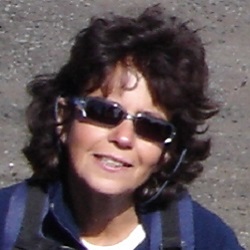
Permanent Professor of PPGI
Research Line: Business Support Systems
Started at PPGI: 01/2007
Work regime: 40h Full Time
Lattes: http://lattes.cnpq.br/0926018459123736
Research group: Accessibility and Usability Center (NAU)
Email: simone@uniriotec.br
Academic Trajectory: Professor Leal Ferreira possesses a diverse academic background that directly informs her multidisciplinary approach to both research and teaching. Her trajectory began with a degree in Oceanography, followed by incomplete undergraduate studies in Physics, which provided her with a solid foundation in the exact sciences before she moved into Computer Science. Subsequently, she deepened her studies with a master’s degree in Computer Graphics and a doctorate in Computer Graphics and Human-Computer Interaction (HCI) from PUC-Rio, consolidating her work at the interface between technology and user experience.
During her career, she gained experience as a professor at IBMEC, where she worked for several years in both teaching and research, strengthening her research trajectory. In 2006, she joined UNIRIO, bringing with her this academic background and expanding her work in accessibility and HCI. In that same year, she founded the Accessibility and Usability Center (NAU), which initially operated informally and was officially established in 2016, becoming a reference point for research in the field.
Over the years, her work has naturally evolved into accessibility research, a topic in which she has supervised numerous bachelor’s, master’s, and doctoral students, establishing herself as one of the leading national figures in the field. Her career demonstrates a sustained commitment to developing more inclusive and accessible technologies, contributing to advances in research in Human-Computer Interaction and Software Engineering.
Scientific Contribution: Professor Leal Ferreira has a significant academic output with an impact on both academia and society, consolidating her work in accessibility and digital inclusion. Her research covers different aspects of accessibility for people with disabilities, including studies on deafness, color blindness, functional illiteracy, the elderly, autism, and cerebral palsy, contributing to the development of more inclusive technological solutions.
Her work has been widely recognized in the scientific community, with award-winning articles at renowned events such as the Brazilian Symposium on Human Factors in Computer Systems (IHC). Furthermore, she has produced accessibility manuals that have become references in the field, are frequently cited in calls for scientific events, and serve as support material for researchers and professionals.
The Accessibility and Usability Center (NAU), founded and coordinated by her, has become a national and international reference, making scientific materials accessible and available for public consultation on its website, and promoting initiatives to expand access to assistive technologies. The recognition of her work was also reflected in her second-place finish in the W3C award for the governmental area in 2016, reinforcing NAU’s relevance in applied research and its impact on the formulation of accessibility guidelines in Brazil.
Interdisciplinarity is one of the pillars of her research, enabling collaborations across different areas of knowledge, such as medicine, engineering, and the social sciences, enriching discussions on digital inclusion, and making its solutions more comprehensive and effective.
Contributions to the PPGI: Professor Leal Ferreira’s impact on the PPGI-UNIRIO has been significant, consolidating her work in interdisciplinarity, applied research, and academic engagement. Her work strengthens the integration of Computer Science with other areas of knowledge, promoting collaborations that broaden the reach of research produced within the program.
One of her outstanding initiatives was strengthening the partnership with Fiocruz, thereby reinforcing applied research and expanding opportunities for institutional collaboration. This closer relationship enables the development of projects that directly impact society, aligning technology with the needs of the healthcare sector.
The professor emphasizes that applied research and social impact should be among the distinguishing features of the PPGI-UNIRIO, highlighting the importance of publicizing the program’s activities to expand its influence and attract more students to postgraduate studies.
Researcher Training: Since joining the PPGI-UNIRIO, researcher training has been one of Professor Leal Ferreira’s main focuses, consolidating her work in supervising master’s and doctoral students. His work has had a direct impact on both the job market and academia, with alumni holding prominent positions at national and international universities, including institutions in Portugal and France.
The influence of her research extends beyond the academic environment, as reflected in the professional performance of her advisees, many of whom apply the knowledge acquired at NAU in their workplaces, thereby amplifying the impact of the methodologies developed at the center. This dissemination strengthens the field of digital accessibility, promoting more inclusive practices in various sectors.
One of the most significant reflections of this impact is the substantial presence of NAU alumni on accessibility committees, ensuring that the concepts and guidelines developed at the center are applied in institutional and regulatory initiatives. The professor emphasizes that applied research generates immediate impact, since many guidelines and methodologies developed at NAU are adopted by public bodies and private companies, expanding accessibility and promoting concrete changes in society.
Visibility and impact in the scientific community: Professor Leal Ferreira has adopted innovative strategies to increase the visibility of her research and the PPGI-UNIRIO program, leveraging digital media and academic networks to strengthen their impact. One of its main initiatives was the creation of an Instagram profile for NAU, allowing the research developed within the center to reach a wider audience and promote greater interaction with the community interested in accessibility and usability. It is worth noting that, after the creation of the NAU Instagram account, the number of applicants registered in 2024 for entry in 2025 increased considerably.
Furthermore, it has used WhatsApp groups that include all current and former NAU students, facilitating the exchange of information, the dissemination of academic and professional opportunities, and the strengthening of the network of researchers trained by PPGI-UNIRIO, creating an active network of collaboration and sharing of opportunities, strengthening the bond between researchers, and facilitating the exchange of experiences. Its participation in conferences and scientific events has also been fundamental in consolidating the presence of NAU and PPGI-UNIRIO in relevant academic forums, ensuring that the research developed in the program is widely recognized.
Her work in digital accessibility has had a significant impact, resulting in frequent invitations to lectures and events, contributing to knowledge dissemination, and expanding the influence of her research in the scientific community. The NAU has also been frequently cited at scientific events, with mentions in calls for conferences and symposia in the field of Human-Computer Interaction (HCI), reinforcing its national and international relevance.
The professor highlights that, in the current scenario, digital communication has become essential for disseminating research, partially replacing the tradition of word-of-mouth, which has lost strength after the pandemic. The use of these new strategies has enabled greater engagement with academic and professional communities, expanding the reach of research on accessibility and digital inclusion.
Plans for 2025-2028:
To further strengthen its performance and that of the PPGI-UNIRIO, the professor proposes the following actions:
- Expansion of Research in Strategic Areas
- Maintain the focus on accessibility and HCI, with new investigations into social impact and digital inclusion.
- Stimulate research into accessible digital marketing, leveraging the growing interest in the field.
- Explore new approaches to accessibility in artificial intelligence.
- Strengthening Academic Production
- Encourage continuous publication in journals and at international events.
- Seek partnerships with researchers from other areas, promoting interdisciplinarity.
- Consolidate PPGI-UNIRIO’s presence in international academic networks.
- Improvement in Scientific Dissemination
- Expand presence on academic social networks.
- Create an official PPGI-UNIRIO channel on Instagram, managed by a scholarship student.
- Continue promoting the dissemination of knowledge through manuals and accessibility materials.
- Improvement of Institutional Collaboration
- Strengthen the partnership with Fiocruz, expanding joint projects.
- Explore new collaborations with international institutions.
- Create initiatives to attract more students to master’s and doctoral programs.