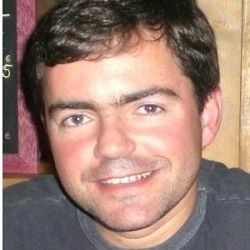
Permanent Professor of PPGI
Research Line: Applied Intelligent Systems and Optimization
Started at PPGI: 05/2009
Work regime: 40h Full Time
Lattes: http://lattes.cnpq.br/8020803376969953
Email: beto@uniriotec.br
Academic Trajectory: Professor Campos earned his master’s and PhD degrees at COPPE/UFRJ, where he developed a solid foundation in modeling and performance analysis, as well as a strong mathematical background. This training enabled him, throughout his career, to move towards more applied topics while maintaining a quantitative, rigorous approach to his research.
During his academic career, he gained experience in distributed algorithms and performance evaluation of computer systems, skills that provided him with comprehensive, interdisciplinary knowledge and enabled connections across different areas of Computer Science.
His postdoctoral studies in Canada were a decisive moment in his career, consolidating his mastery of deep learning and artificial intelligence applied to communication networks. This experience strengthened his research performance and broadened his involvement in international collaborations.
Over the years, Professor Campos expanded his research focus to Information Systems, integrating new concepts and methodologies into his approach while maintaining a quantitative perspective on computational challenges.
He also emphasizes the importance of mathematical training for doctoral students, encouraging the application of quantitative modeling, even in research focused on applied solutions. His commitment to a rigorous approach is reflected in his academic guidance and the pursuit of impactful research in the scientific community.
Scientific Contribution: Professor Campos has directed his scientific work towards high-impact research, aiming to publish in prestigious international journals and at conferences. Recently, he has consolidated his research approach through strategic collaborations and relevant contributions to the areas of communication networks and intelligent transportation systems. He has served on the program committees of international conferences, including IEEE VTC, WCNC, ITSC, and ISCC.
Among his main works, his 2021 collaboration with the University of Toronto, Queen’s University, and Unicamp stands out, resulting in one of the most-cited articles in his recent output. Furthermore, he has dedicated himself to research in vehicular networks and Intelligent Transportation Systems (ITS), publishing studies in internationally recognized conferences and journals in the field, such as IEEE Transactions on Intelligent Transportation Systems, and IEEE Transactions on Vehicular Technology and Ad Hoc Networks.
Another significant aspect of his academic career is his partnership with Professor Katia Obraczka at the University of California, Santa Cruz, with whom he supervised doctoral student Danielle Lopes Ferreira and developed relevant work on user mobility and machine learning, deepening knowledge and contributing to the evolution of the field.
Informal collaboration with IBM Research through an employee who completed a master’s degree (2019) and a doctorate, defended in February 2025. This collaboration on topics such as user transport mode detection, depth estimation of monocular cameras applied to autonomous vehicles, among others, has already produced 6 conference papers and 3 articles in international journals (with 2 articles accepted in 2025). In addition to his research, Professor Campos distinguished himself in organizing the Brazilian Symposium on Computer Networks and Distributed Systems (SBRC), held in 2024 at UFF, one of the country’s leading academic events in the field of networks. His role as the event coordinator highlights recognition of his work in the scientific community.
Lately, he has refined his research approach, directing his efforts towards high-impact publications and international collaborations, thereby reinforcing his influence and relevance in the global academic landscape.
Contribution to the PPGI: Professor Campos’ work in the PPGI-UNIRIO has been characterized by a continuous effort to adapt to and integrate with applied areas, thereby strengthening the program’s research. With encouragement from his colleagues, he has prioritized publications in high-impact journals and conferences, increasing the visibility and relevance of his scientific contributions. He has also been working to expand internal collaborations within the PPGI-UNIRIO program and to seek partnerships with external professors from UFRJ, UFF, and UERJ.
Another important aspect of his work is strengthening mathematical modeling within the program, drawing on his experience to integrate greater mathematical rigor into applied research, ensuring that scientific investigations have a solid, methodologically consistent foundation. This work has contributed to the PPGI-UNIRIO program adopting more structured approaches, allowing the research developed to have greater impact and applicability in academic and professional settings.
Researcher Training: Professor Campos has a solid track record of training students, with mentorships that have led to academic careers and significant recognition. One of the highlights of his career is his first doctoral student, whom he supervised in 2019 and who currently works as a researcher at the University of California, San Francisco, demonstrating the impact of his mentorship on his students’ international projection.
Furthermore, his commitment to academic excellence is evidenced by the awards received by his advisees, including two students who received best dissertation awards in 2020 and an honorable mention for best paper at WPerformance’23, reinforcing the quality of the research developed under his supervision.
Despite these positive results, he highlights a growing challenge in attracting new students, especially for doctoral programs, reflecting a national trend of low demand for stricto sensu postgraduate programs. This reality raises questions about the future of advanced training and the need for strategies to stimulate students’ interest in pursuing academic and research careers.
Visibility and Impact in the Scientific Community: Professor Campos is actively engaged in the scientific community, contributing significantly to research and organizing academic events. His involvement includes serving on several international conference committees and reviewing articles for high-impact journals, thereby helping maintain the quality and rigor of scientific production in the areas of computer networks and distributed systems.
His engagement in organizing the Brazilian Symposium on Computer Networks and Distributed Systems (SBRC2024) was a milestone in his career, consolidating his presence in the national academic community and strengthening the event’s visibility as one of the most relevant in the field in Brazil.
In addition to academic research, he has been exploring collaborations with industry, an initiative that, although still in its initial stages, is considered essential for strengthening applied projects and recording technological innovations. This effort reflects his vision of bringing academic research closer to the demands of the productive sector, expanding the impact of his scientific contributions beyond the university environment.
Plans for 2025-2028:
- Expansion of Research in Strategic Areas
- Continue exploring emerging themes such as 6G networks, ITS, and machine learning applied to networks.
- Expand collaboration with international researchers and strengthen ties with UFRJ groups.
- Strengthening Academic Production
- Maintain focus on high-impact journals and conferences.
- Encourage students to conduct high-level research that integrates mathematical modeling with practical applications.
- Improvement in Scientific Dissemination
- Resume using LinkedIn and create a personal page to disseminate research.
- Consider creating an institutional GitHub to centralize code and facilitate access for the scientific community.
- Partnerships with Industry
- Explore collaboration opportunities with telecommunications and vehicular network companies, in addition to IBM Research, with which it already collaborates.
- Seek patent registrations and software development in partnership with industry.